
WHY DID WE CHOOSE THE MEDIUM XINGU?
In the heart of the Amazon Rainforest, in the middle reaches of the Xingu River, there is a pulsating and sacred life, which has maintained a relationship of balance and respect with nature over time.
However, the Medium Xingu faces significant challenges. The expansion of agricultural activity and the unbridled exploitation of the forest threaten the delicate balance of the forest. The territory is a strong reference point for the socio-environmental diversity of the Amazon, with one of the most extensive sets of interconnected protected areas in the world and home to diverse populations with different cultures and languages.
The call for immediate action to preserve the forest is urgent. It’s past time to act to protect and preserve this strategic place for future generations. It is in this sense that the Medium Xingu Project was born, to support income generation for local families and the conservation of the Amazon rainforest, understanding that there is no one without the other.
MEDIUM XINGU PROJECT
In the state of Pará, meandering through the exuberant landscapes of the Xingu River, riverside populations in the regions of Altamira, Uruará and São Félix do Xingu are organized to ensure that the forest remains standing, using their knowledge to sustain themselves and preserve the land.
The Medium Xingu Project was born in 2022, with the aim of helping the environment and generating income for people living in protected areas in these places. The initiative, developed by Synergia Socioambiental, operates on three fronts:
Support for the Sementes da Floresta Agroextractivist Association (AASFLOR)
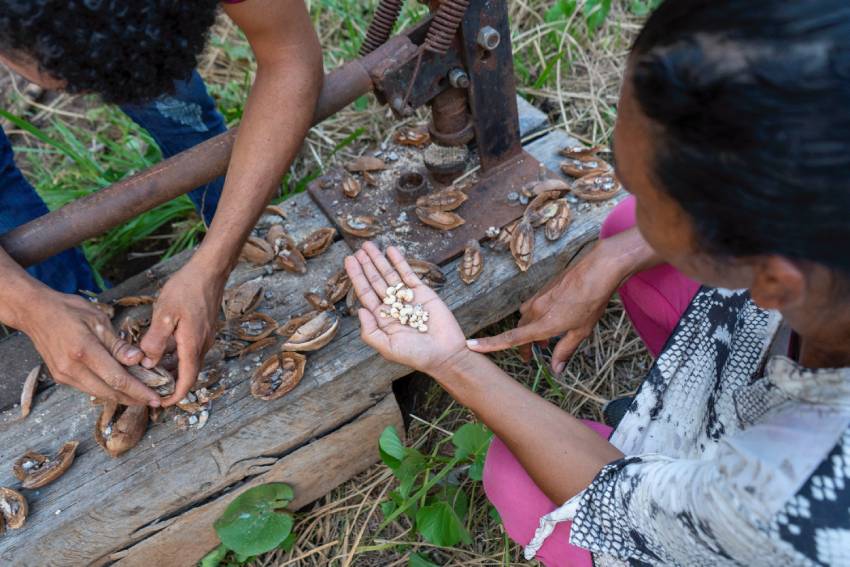
In Uruará, family farmers from rural settlements who are members of AASFLOR collect seeds and have begun the process of extracting oil from them. This started with the creation of a small power plant to facilitate the process and, over time, soap production, ointments and moisturizing oils, among other products.
The Redes do Médio Xingu Project helped to develop the brand, labels, packaging and made it possible to sell the products at fairs and events throughout Brazil, such as the Naturaltech Fair, held in July 2023 in the city of São Paulo.
In August 2023, to meet the growing demand for AASFLOR’s products, the Redes do Médio Xingu Project contributed to strategic planning in the area of sales and the association’s internal organization, helping to set production and trade targets for the coming months.
Support for the cocoa production chain
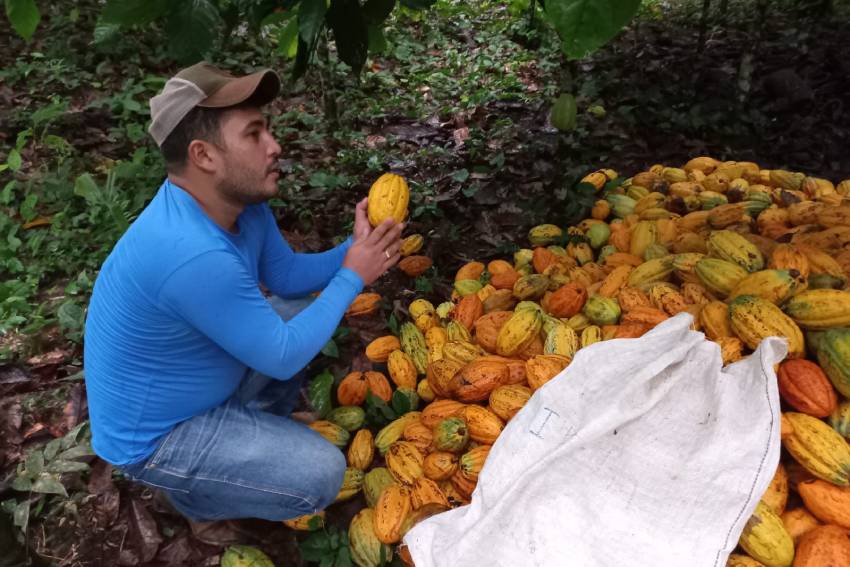
Families from the Terra do Meio Ecological Station (ESEC) have started growing cocoa, which is harvested throughout the year, with a peak in May and June, allowing the population to generate more income.
In partnership with the Chico Mendes Institute for Biodiversity Conservation (ICMBio), the Redes do Médio Xingu project works with these families providing technical assistance and rural extension, support for the governance of the local productive arrangement and strengthening access to markets.
Construction of the community canteen at ESEC Terra do Meio
For many years, the families of ESEC Terra do Meio have traveled to other regions to buy food and other necessities, but this comes at a high cost in terms of freight and gasoline. In conversations with the Redes do Médio Xingu project, the families pointed out the importance of a community canteen.
To help solve this problem, Redes do Médio Xingu invested in the construction of a new canteen, as well as supporting the maintenance of the commercial structure and agreements for selling the products to the local population. The Redes do Médio Xingu project has also contributed to the storage of the nuts and cocoa grown, with the construction of a storage room in partnership with ICMBio. This equipment facilitates the process of disposing of the two crops.
WHERE WE OPERATE
Sementes da Floresta Agroextractivist Association (AASFLOR)
The Sementes da Floresta Agroextractivist Association (AASFLOR) was born in 2011, as a result of the organization and engagement of family farmers from agrarian reform settlements in the Medium Xingu, and the mobilization of Sister Angela, a nun who played a key role in the germination of AASFLOR. Since then, AASFLOR has achieved great things, structuring a production chain based on sustainable extraction and processing of non-timber forest products.
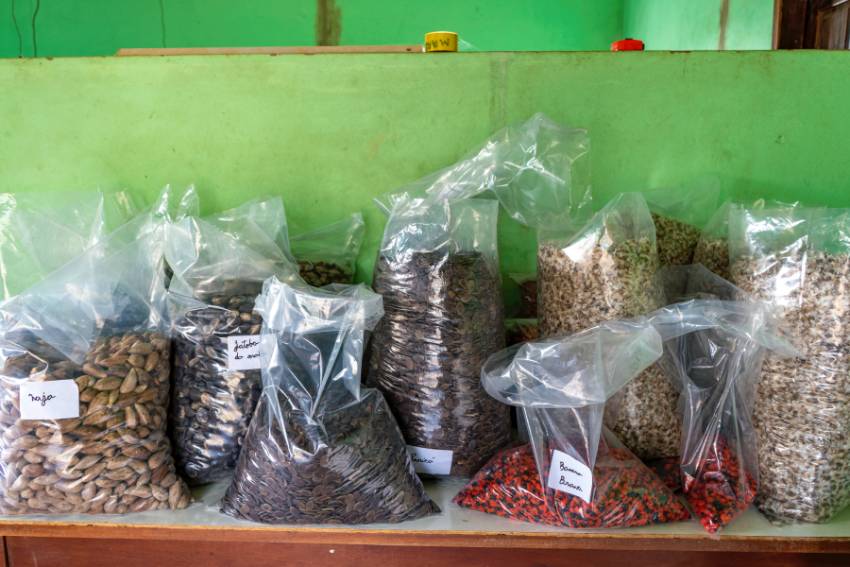
Currently, the initiative focuses its activities on collecting forest seeds for the Xingu seed network – which promotes forest restoration actions – and extracting vegetable oils in small mills operated by the members. From these oils, they produce their personal care and food products. From Babaçu, they extract oil from the kernels and flour from the mesocarp. From the Castanha-do-Pará, they produce flour and oil and sell them in natura to the Terra do Meio Network.
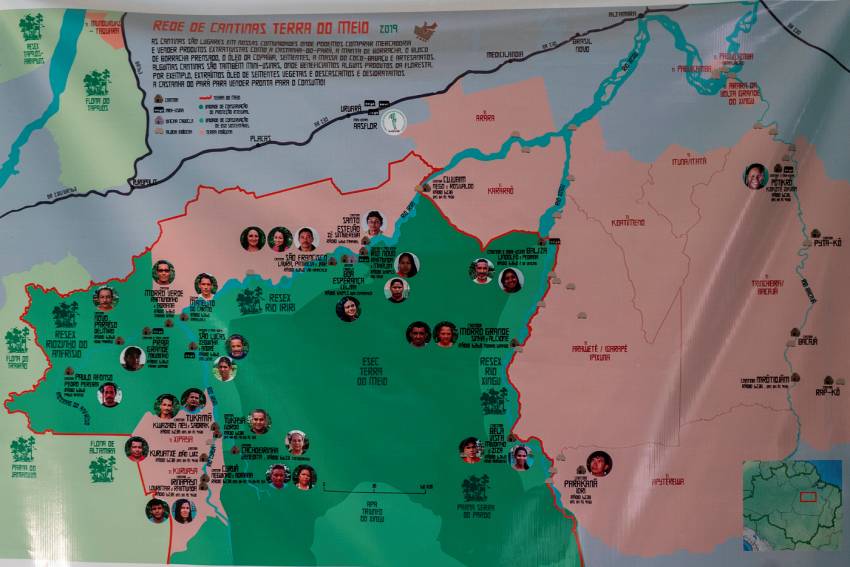
AASFLOR is part of the Terra do Meio Network, which connects communities and enables socio-biodiversity chains in the region.
Cocoa production chain at Terra do Meio Ecological Station
Based on traditional knowledge and production arrangements, families grow cocoa in agroforestry systems using agricultural techniques at the Terra do Meio Ecological Station, which surrounds the Iriri river basin. In addition to cocoa, they also plant species such as copaiba and andiroba, which provide shade for the cocoa and greater circulation for the local fauna.
Only these families who live in the region and act as protectors of the forest are able to reproduce the ways of life that harbor the knowledge and know-how necessary for the future management of this environment. The way they have developed, from a socio-economic point of view, reverberates in the region as an example, as a possible practice to inspire others.
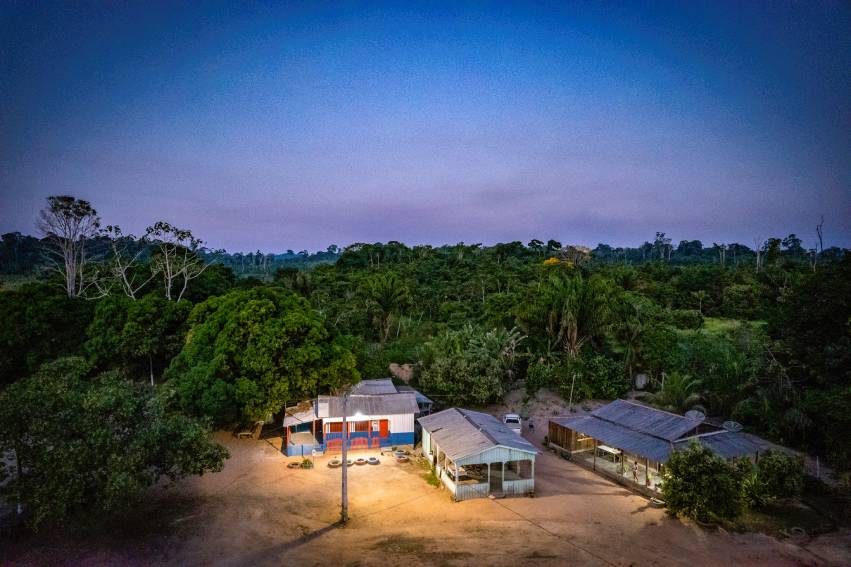
Canteen at the Terra do Meio Ecological Station
The process of organizing the riverine and indigenous peoples of Terra do Meio involves structuring a system for marketing products, a consequence of difficult access and high transport costs. This geographical isolation has led the riverine and indigenous communities of Terra do Meio to organize themselves into a network of canteens, spread over a territory of millions of hectares. This is how they found a solution for marketing their different traditional forest products under fairer contracts, established in a transparent and collective manner.
To promote the access to food and basic necessities, the importance of a community canteen was highlighted. As a way of supporting this front, the Medium Xingu Project invested in the construction of a new canteen, support for the maintenance of the structure and agreements for the sale of products to the local population.
Support for the Terra do Meio Network
Synergia supports the marketing structure for extractive products carried out by the regional network Terra do Meio, by hiring a professional dedicated exclusively to the commercial area of the network.
RESULTS
The fruits harvested thanks to the project.
The seeds…
In 2023, AASFLOR took part in Naturaltech, the largest natural products fair in Latin America. In addition to the sales and visibility of its products, important partnerships were signed for the Association, which guarantee the expansion of production and sales of products to reach a larger market.
In addition to closer relations between the Association and other organizations, a partnership was signed with three institutes whose proposal is the solidarity economy, the reception of family farmers, natural productions, and cooperatives: the Chão and Baru Institutes, as well as Armazém do Campo.
These institutes have acquired AASFLOR’s products and will make them available to the public, promoting brand recognition in São Paulo and creating the possibility of new sales in the Association’s future.
Support for beekeeping
Synergia continued its support for AASFLOR, through the Medium Xingu Project, by holding a beekeeping workshop in the last quarter of 2023 for family farmers from three settlements in rural Uruará, Pará. The workshop aimed to train participants in the operation, which has great potential for generating income and environmental benefits due to the importance of bees as pollinators.
The course, taught by Yuri Rafael, a Synergia technician, began with a theoretical approach, tracing the history of bees in Brazil, their products, anatomical characteristics, and behaviour. The participants then learned how to identify and capture swarms, setting up AASFLOR’s first apiary.
The activity involved a diverse group of participants, including three women, eight young children of agro-extractivists and four adult men. It became clear that beekeeping is closely aligned with the daily practices of the agro-extractivists, who already have a relationship with bees in their agricultural and forestry activities. The apiary installed serves not only as a point of orientation for other families, but also as a place to multiply swarms, contributing to the sustainable development of the region.
The cocoa…
Produced on a family scale, in biodiverse and low-carbon agroforestry systems, within the normative rules of the unit’s management body, cocoa generates a value chain that combines income generation with forest protection, allowing for an improvement in the living conditions of traditional communities that have historically acted as the true guardians of the forest.
The result was excellent in the last cocoa harvest at the Terra Do Meio Ecological Station, with 100% of the production having gone through the fermentation process with a satisfactory degree of drying, with low humidity levels at the time of sale. Around 3.2 tons have been sold this harvest, a figure that will only grow.
Click the button to provide your feedback on the documentary. Your opinion is of utmost importance to us.
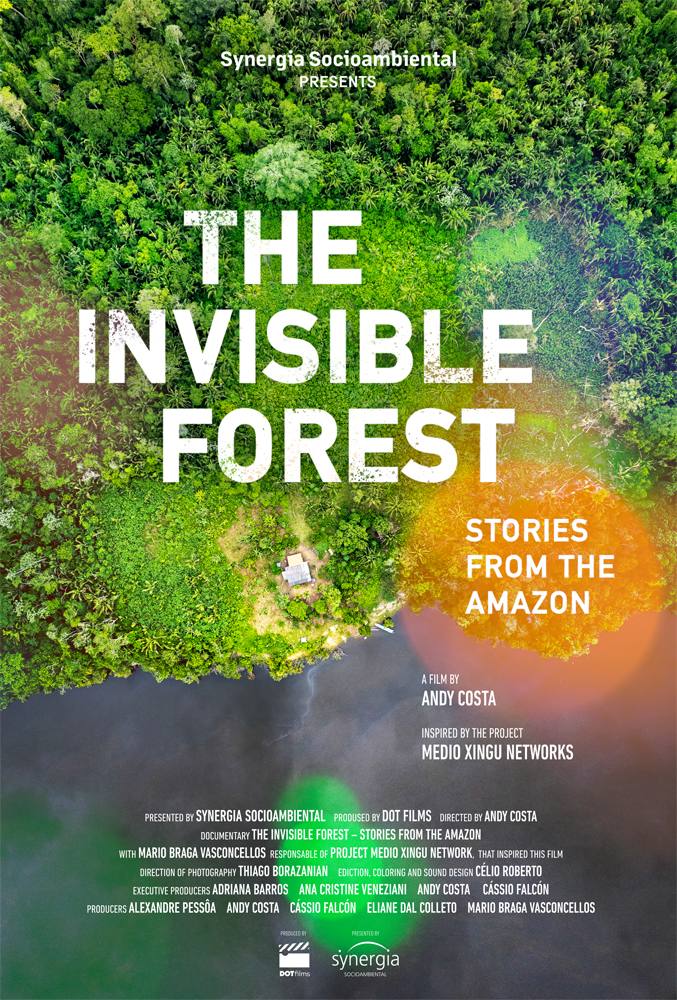
The Invisible Forest – Stories From The Amazon
Length: 27 min
Release date: Agosto de 2023
Genre: Documentary
The documentary “The Invisible Forest – Stories From The Amazon” connects the stories of struggle and resistance of people who face challenges to generate income and keep the Amazon rainforest standing.
These people feel part of the forest. They live in the Middle Xingu region, an important area of the Brazilian Amazon that is under great pressure from deforestation due to mining, logging, cattle ranching and monoculture. They defend ways of life that, adapted to new realities, harbor precious knowledge and know-how for caring for the forest, combined with the development of the bioeconomy.
The documentary was awarded the title of semifinalist at the Angeles Documentaries, in the short documentary category, and was selected to compete at the Lisboa Indie Film Festival.
The national premiere took place on September 5th, Amazon Day.
Directed by
Andy Costa
Director of Photography
Thiago Borazanian
Editing, colorization and sound design
Célio Roberto
Executive Producer
Adriana Barros, Ana Cristine Veneziani, Andy Costa, Cássio Falcón
Production
Alexandre Pessôa, Andy Costa, Cássio Falcón, Eliane Dal Colleto, Mario Braga Vasconcellos
Winner






Semi Finalist

Official Selection













EXHIBITION SCHEDULE
Click the button to provide your feedback on the documentary. Your opinion is of utmost importance to us.
CONTRIBUTE TO THE PROJECT
In the fabric of society, traditions shape the culture and identity of a population. They are legacies of the past, teachings passed down through generations. Preserving and honoring these traditions is more than a choice; it is a necessity if we are to understand our collective history and our identity as a nation.
There are many ways to help make this happen.
- Spreading the word about the documentary “The Invisible Forest – Stories From The Amazon” to your network of contacts, on your social networks, thus increasing knowledge about the work of these people.
- Consuming and valuing the products produced with Terra do Meio cocoa and AASFLOR products.
- Financially supporting the Medium Xingu Project to continue supporting AASFLOR and the cocoa producers.
- Replicating the model developed by Synergia in other territories, where the local knowledge of a population can be valued and go hand in hand with sustainability and income generation.
Contact us: contato@synergiaconsultoria.com.br
SYNERGIA SOCIOAMBIENTAL
Synergia Socioambiental is a consultancy founded in 2005 by an entrepreneurial woman from the northeast of Brazil with a dream of contributing to the transformation of the territories in which she operates. The company brings together passionate people who believe that the sum of their efforts in social, environmental and cultural actions is capable of generating great revolutions.
With more than 18 years of experience, the consultancy is among the market leaders, developing projects for the public and private sectors, offering solutions in crisis management and prevention, social development, territorial relations and knowledge management, throughout the national territory, especially in the Amazon.